A bomb takes two
seconds to get there.
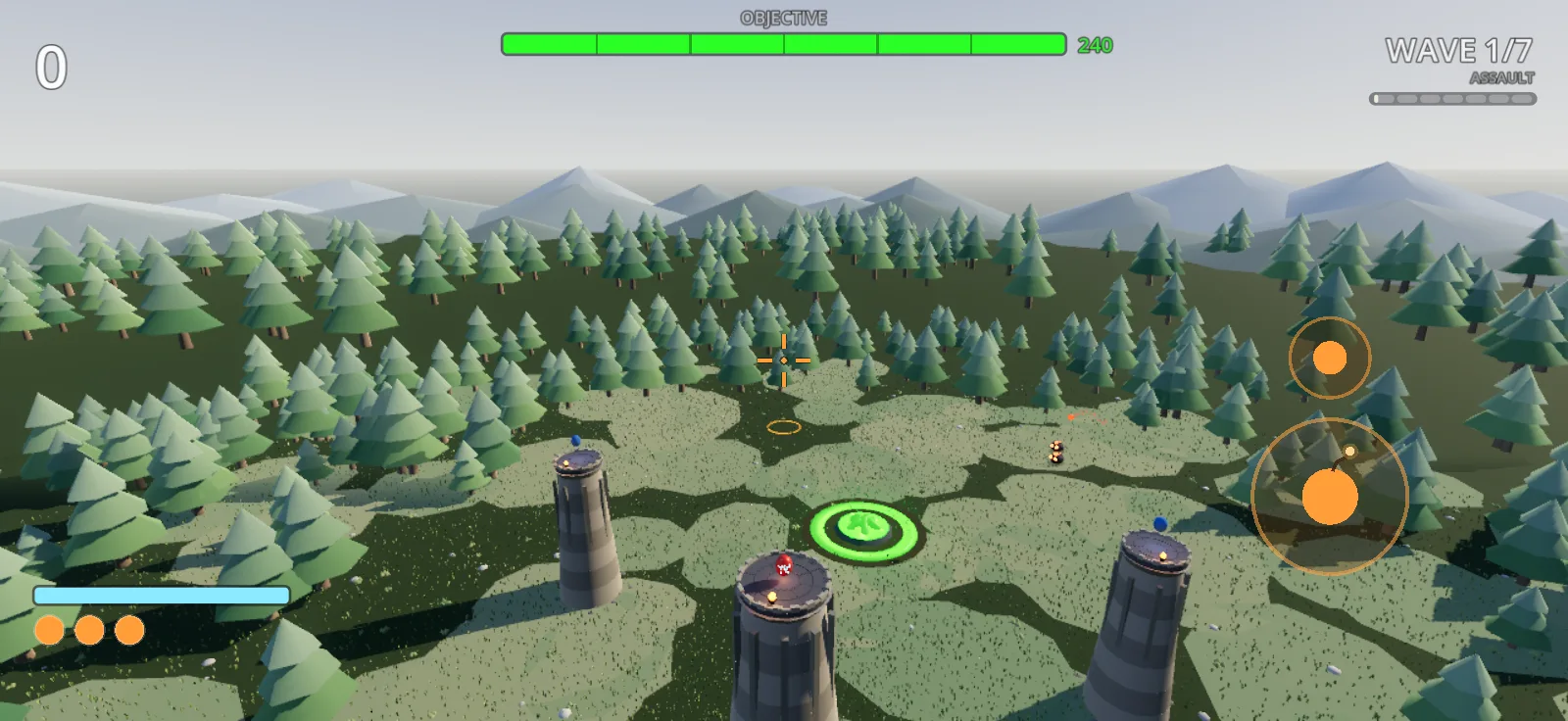
Hold the centre tower of three and throw cooked bombs at things walking for the thing you are protecting. The bomb is slow. They do not wait. Throw where they will be.
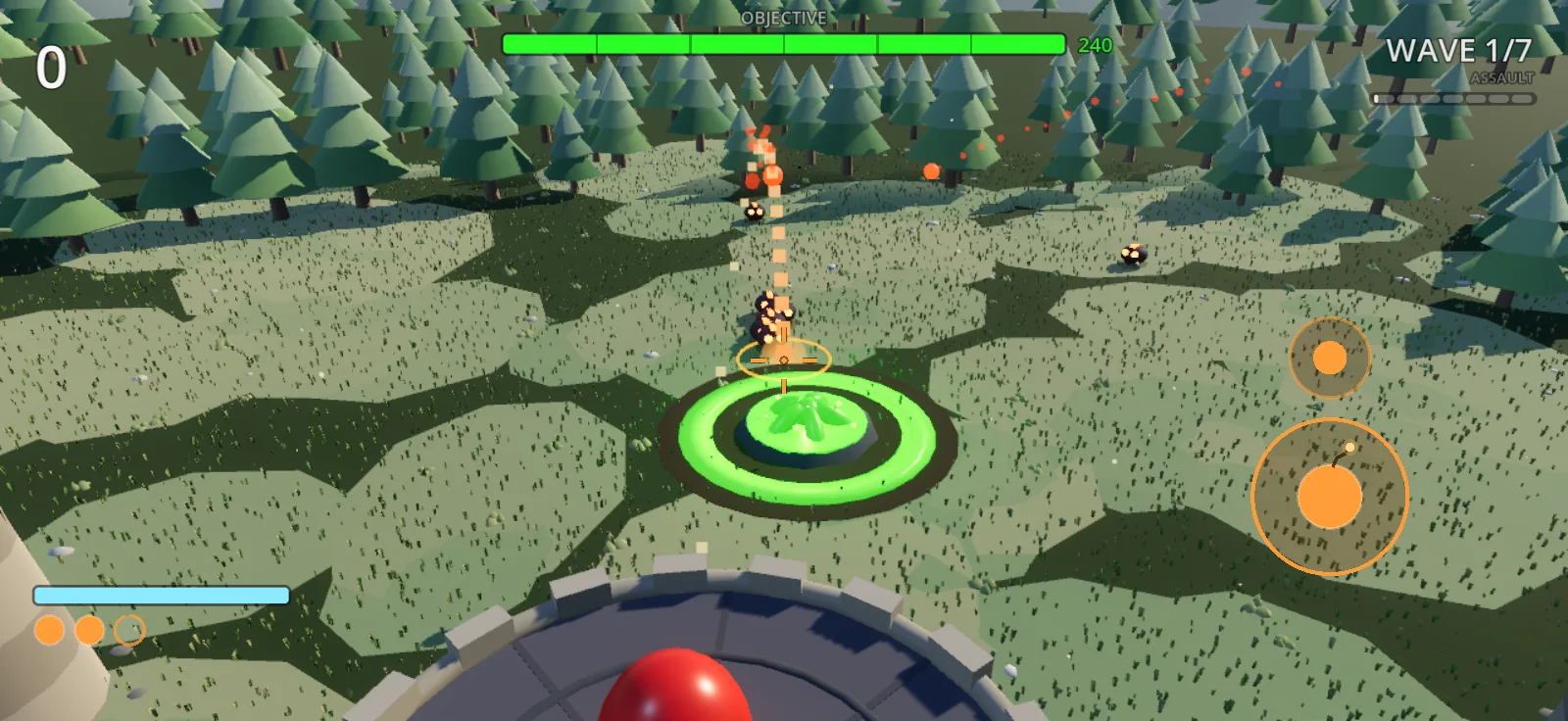
THE RETICLE IS ON THE GRASS. THE GROUP IS NOT STANDING ON IT.
THE WHOLE SKILL
Throw where they will be.
Hold the button and take as long as you like — nothing about lining a shot up is timed. But the bomb is in the air for up to 2 seconds, the blast is only 2.6 metres across, and a walker covers over 4 metres while it flies. Throw at where something is standing and you miss it at every range. Throw at where it is going and you don’t.
AND THE RETICLE NEVER LIES
The arc you see while aiming and the bomb that actually flies are the same solver at the same time step, and bombs go off on contact — so the blast happens exactly where the ring is drawn. When you miss, you missed. Nothing in this game is a coin flip.
TWO THINGS TO THROW
One magazine, two answers.
The bomb
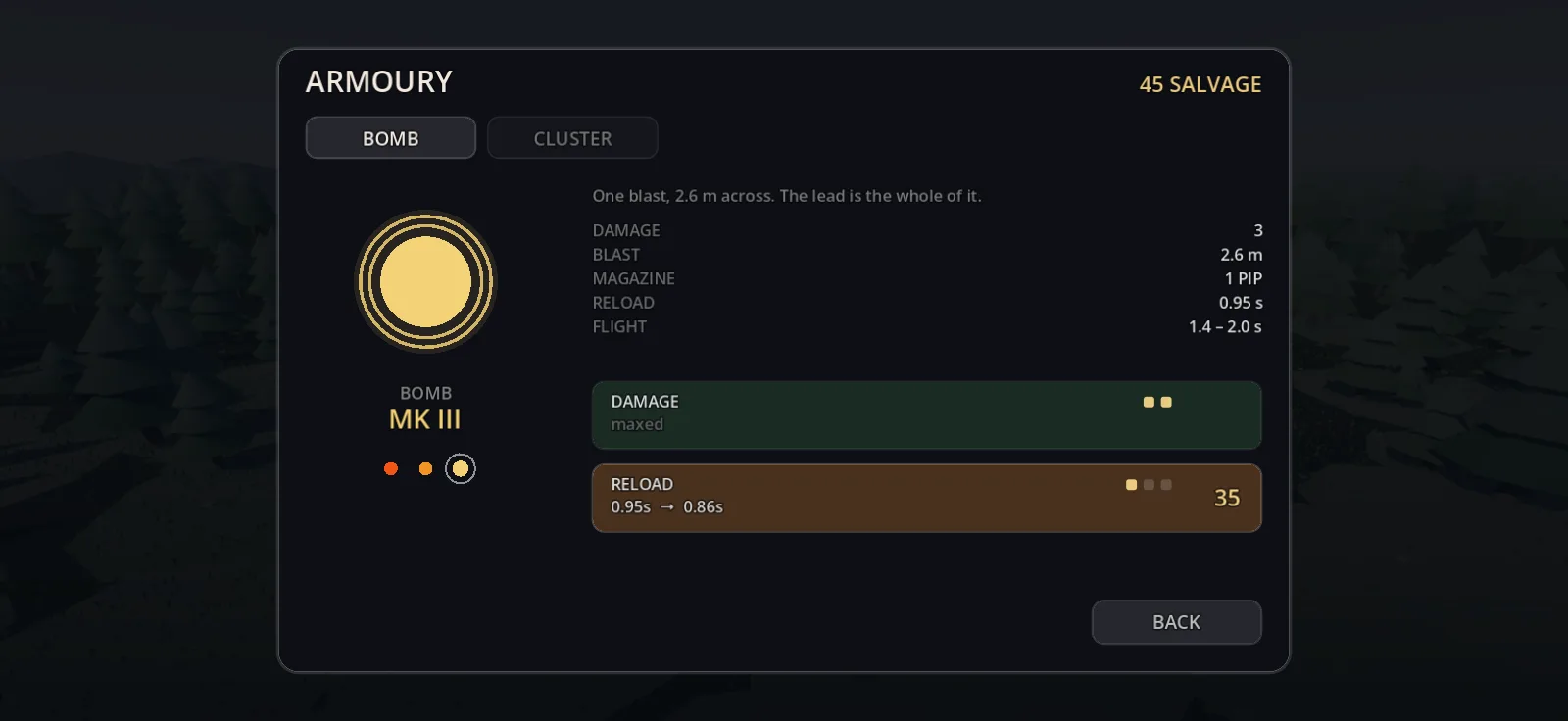
One round, one tight blast 2.6 metres across, the shortest flight in the game. It goes off on contact, so it detonates exactly where the ring was drawn. Costs one pip of a shared magazine.
The lead is the whole of it. There is nothing else to learn and it never stops mattering.
The canister
A violet shell that cracks open ten metres up and lays nine bursts down in a solid disc four metres wide. Twice the footprint of a bomb, twice the magazine, and half again the flight — a harder lead for a wider answer.
You can carry one of each and never two canisters. So you hold it, and you watch for three of them to line up.
HOW TO READ IT
Colour is grammar out here.
Every colour in this game means exactly one thing and never means anything else. That is why a field with forty things on it stays readable at arm’s length.
- AMBER
- Yours to throw. Ammo pips, the reload sweep, the fire button, and the arc itself. Nothing you do not control is this colour.
- CYAN
- You. Your health bar, and the sigil painted on the back of your own shell so you can find yourself on a crowded deck.
- RED
- Harm, incoming and loss. A shot in the air, a bar draining, a run ending.
- GREEN
- The objective — the thing in the grass you are standing on a tower to protect. It is the only green on the field.
SIX FRAMES
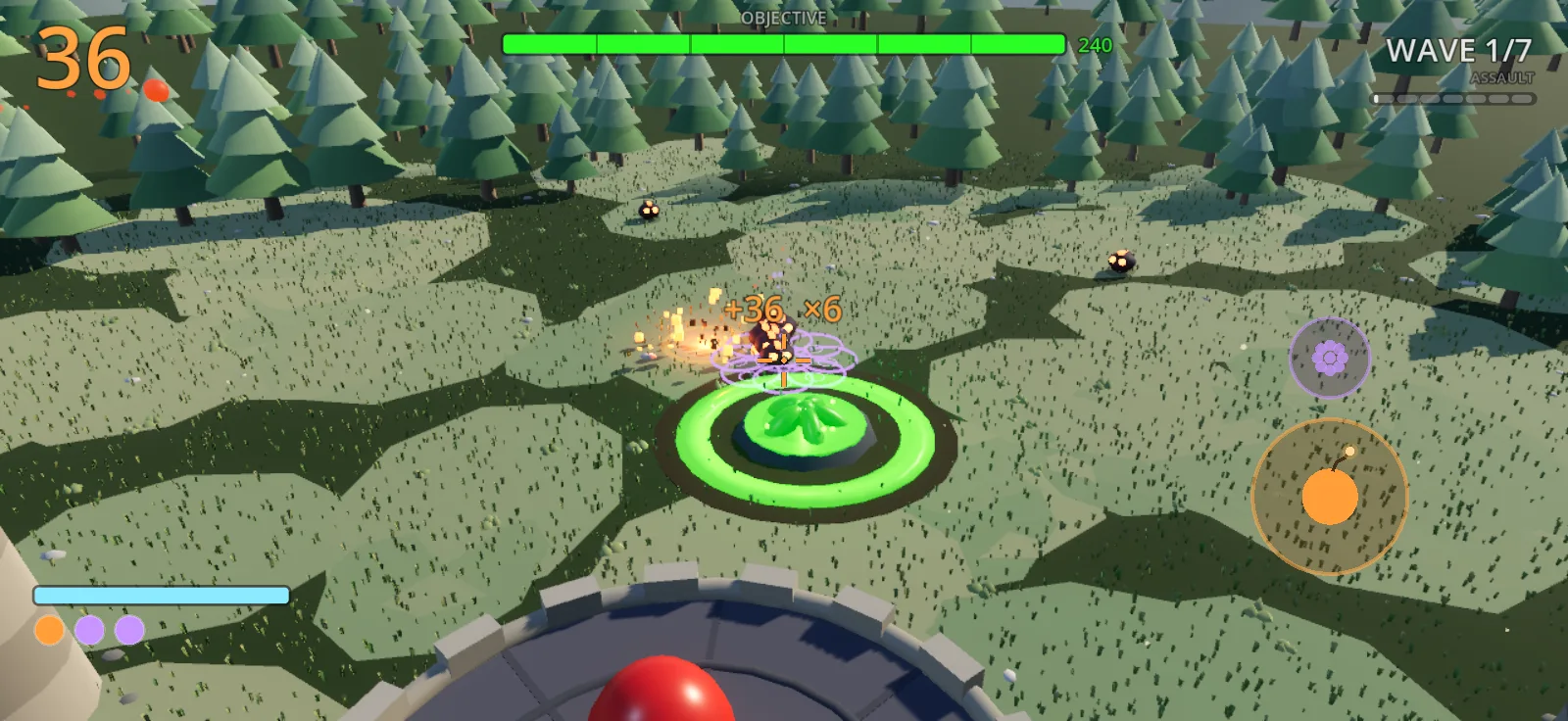
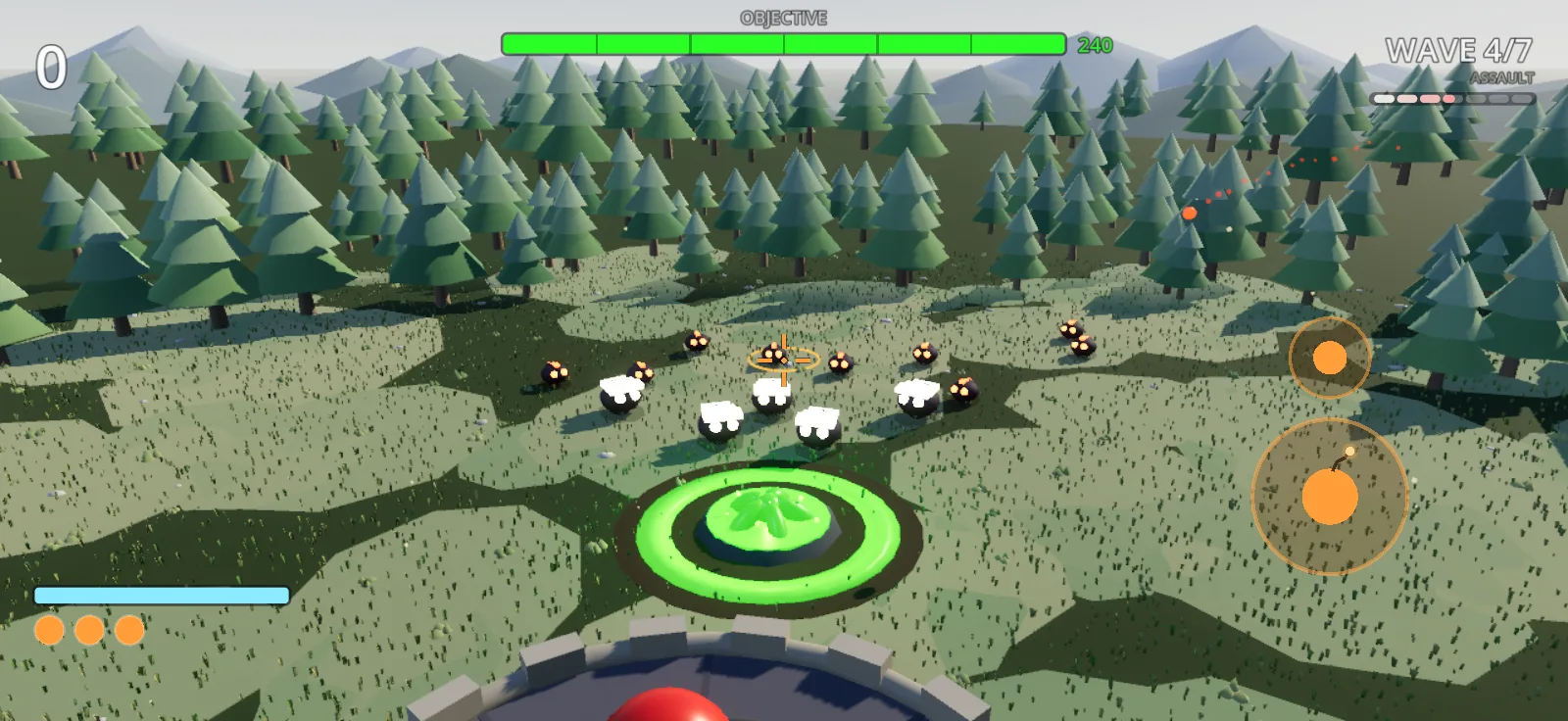
IT KEEPS SCORE HONESTLY
There is a number, and it is the real one.
KILLS PER BOMB
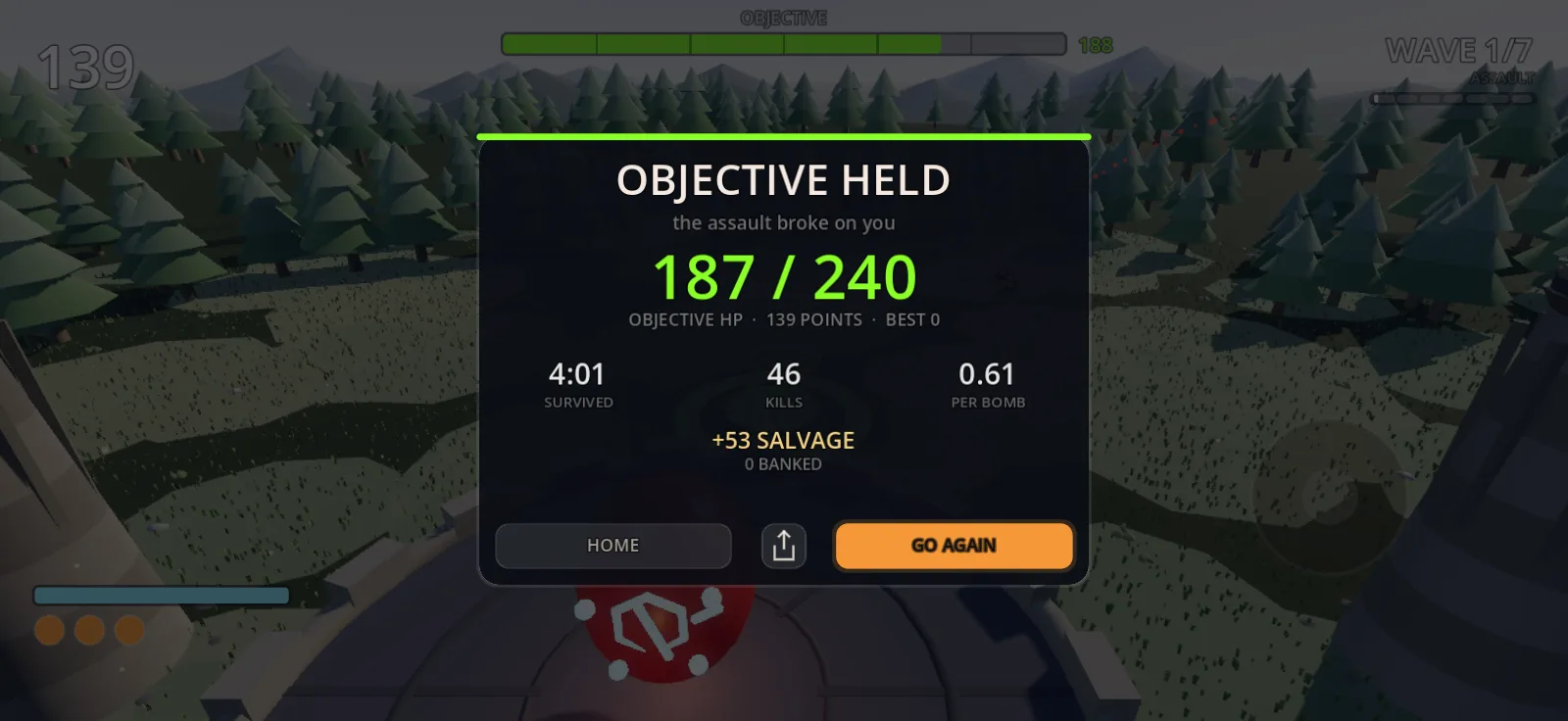
Not stars, and not a percentage of nothing. The end card reports the real number — the same one this game’s own test bots are measured against. A bot that throws at where things are standing scores about 0.46. A bot that solves the intercept perfectly scores about 0.73. You will find out where you sit.
STRAIGHT ANSWERS
Is this tower defense?
No, and it is worth saying plainly because the tower in the name suggests otherwise. You do not place anything, build anything or plan a layout. You are standing on a tower with a real-time aiming and dodging problem: bombs in one hand, a movement stick under the other thumb, and things walking at the thing you are protecting.
Is aiming timed?
No. Hold the button and take as long as you like — nothing about lining a shot up is under a clock. The FLIGHT is the clock. The bomb is in the air for up to two seconds and a walker covers more than four metres while it flies, so the pressure is entirely in what happens after you let go.
Does the arc lie to me?
It cannot. The arc you see while aiming and the bomb that actually flies are the same solver at the same time step, and bombs go off on contact — so the blast happens exactly where the ring is drawn. When you miss, you missed. Nothing in this game is a coin flip.
What happens when I lose?
You get paid. Every run banks salvage, win or lose — more for clearing more, more again for holding on — and it is spent in the armoury on heavier charges and faster hands. The upgrade is not a number in a menu either: the shell in your hand visibly changes, mark by mark.
Is there an end?
Hold the seven-wave assault and a nine-wave siege unlocks. Hold that and there is an eleven. Above all of them sits an endless one with no win condition at all — only a record.
Does it need a connection?
No. There are no accounts and no sign-in, and the game plays fully offline. Anonymous analytics are optional and there is a switch for them in settings.
Why does the explosion arrive late?
Because sound takes time to cross a field. Your bomb goes off forty metres away and you see it before you hear it. That is not a flourish — it is the game teaching you distance through your ears, and it is why this one is worth playing with the sound on.